Cinematic Book Trailers vs. Standard Videos: What Gets More Sales?
By Timothy Foster, Founder of Market Your Industry (MYI)
Every author knows they need video.
But not every video is created equal.
In the world of book marketing, there are two very different approaches:
1. Standard videos
(quick clips, talking-head videos, simple text-over-image edits)
2. Cinematic book trailers
(high-impact visuals, story-driven pacing, professional motion graphics, soundtrack, voiceover)
Both can work — but one consistently outperforms the other in engagement, shares, preorders, and sales.
Let’s break down what the data shows, why cinematic storytelling wins, and how authors can use this shift to increase their visibility in the most competitive years the industry has ever seen.
1. Video Is the Most Powerful Tool an Author Has — But Quality Matters
Across the board, video is the top-performing marketing medium:
89% of marketers say video gives the highest ROI.
Source: Wyzowl State of Video Marketing Report, 2024.People retain 95% of a message in video vs 10% through text.
Source: Insivia Video Statistics Report.Landing pages with video increase conversions by up to 80%.
Source: EyeView Digital Study.
You already know video is essential.
The real question is:
What type of video actually sells books?
2. Standard Videos Grab Attention — but Rarely Build Emotion
Standard videos (simple edits, text animations, talking to the camera) have their place. They’re fast to create and useful for:
Sharing quick updates
Connecting casually with readers
Posting frequently on social media
Behind-the-scenes content
The problem?
Standard videos rarely create the emotional impact needed to move a reader from interest to purchase.
Why?
They’re familiar
They blend in with everyday content
They don’t create a cinematic “moment”
They lack narrative buildup
They don’t showcase the story
And according to neuromarketing research:
Emotion-driven content results in 2–3x higher conversions than rational or informational content.
Source: Nielsen Consumer Neuroscience.
Standard videos inform.
Cinematic trailers persuade.
3. Cinematic Book Trailers Trigger Emotional Buying Behavior
A cinematic book trailer uses:
Music
Atmosphere
Motion graphics
Color grading
Professional pacing
Voiceover
Story-driven editing
This combination taps into emotional decision-making, not just curiosity.
And that’s important because:
Readers decide in seconds whether to keep scrolling or stop
Source: Microsoft Attention Span Study.Short-form cinematic visuals create stronger emotional recall
Source: APA Media Psychology Research.Emotions drive buying behavior far more than logic
Source: Harvard Business School / Gerald Zaltman.
A cinematic trailer isn’t content.
It’s a story snippet — and humans are wired for story.
4. Cinematic Videos Outperform Standard Videos Across Every Major Metric
Here’s what current research and industry reporting reveals:
A) Higher Engagement
Cinematic visuals increase watch time by 2x to 4x compared to basic videos.
Source: Video Marketing Science Quarterly, 2024.Short, cinematic clips perform especially well on TikTok and Instagram Reels — the most influential platforms for book discovery.
B) Higher Share Rates
Video content is shared 1200% more than static posts,
but cinematic videos outperform standard videos by as much as 3x in share rate.
Source: Brightcove Video Engagement Study.
C) Higher Purchase Intent
Viewers exposed to cinematic-style promotional video report 58% higher purchase intent than those watching basic video formats.
Source: HubSpot Marketing Data Review, 2024.
D) Stronger Immediate Emotional Response
Viewers form a positive emotional association with cinematic trailers in under 3 seconds.
Source: Nielsen Neuro Lab Study on Motion Graphics & Music.
Standard videos only achieve this when the creator has a large, pre-existing following.
Cinematic trailers achieve it even for unknown authors.
5. BookTok’s Rise Shows Exactly Which Content Works
BookTok — now sitting at over 370 billion views — favors:
Cinematic edits
Sound-driven storytelling
Dramatic visuals
Emotional hooks
Mood + atmosphere
Quick-cut narrative teasers
All of these elements come naturally from a cinematic book trailer.
BookTok is not interested in talking-head promos.
It’s interested in emotion + aesthetic.
And the numbers reflect that:
BookTok contributed to a 30% surge in YA print sales in the U.S.
Source: Circana BookScan, 2024.Fantasy & sci-fi sales in the UK rose 41%, largely due to TikTok shares and book trailer-style edits.
Source: UK Publishers Association, 2024.
This tells us something very important:
Readers want books presented in a visual narrative, not a static announcement.
6. Cinematic Trailers Communicate Genre and Tone in Seconds
Readers judge what to buy based on:
Mood
Tone
Genre
Atmosphere
Emotional promise
With millions of books flooding the market each year, authors have less than 5–8 seconds to communicate this.
Standard videos struggle to do that.
A cinematic trailer does it effortlessly.
7. Authors Who Use Cinematic Trailers Look More Professional — and Sell More
A cinematic trailer signals:
Investment in your craft
Seriousness as an author
Storytelling competence
Professionalism
Genre clarity
Industry-level branding
And professionalism matters because:
Readers trust professional-looking books 3x more than amateur-looking ones, even if the content is the same.
Source: BookNet Consumer Buying Behavior Study.
This directly affects:
✔ Preorders
✔ Launch-week sales
✔ Press coverage
✔ Influencer engagement
✔ Bookstagram & BookTok shares
Cinematic trailers build perceived authority, which directly influences buying behavior.
**8. So Which Gets More Sales?
Cinematic Trailers — By a Wide Margin**
When comparing the two:
MetricStandard VideosCinematic Book TrailersEngagementMediumHighEmotional ImpactLow–MediumVery HighShare RateMediumExtremely HighConversion RateLow–MediumHighBrand PerceptionModeratePremium/ProfessionalSales InfluenceInconsistentStrong & Measurable
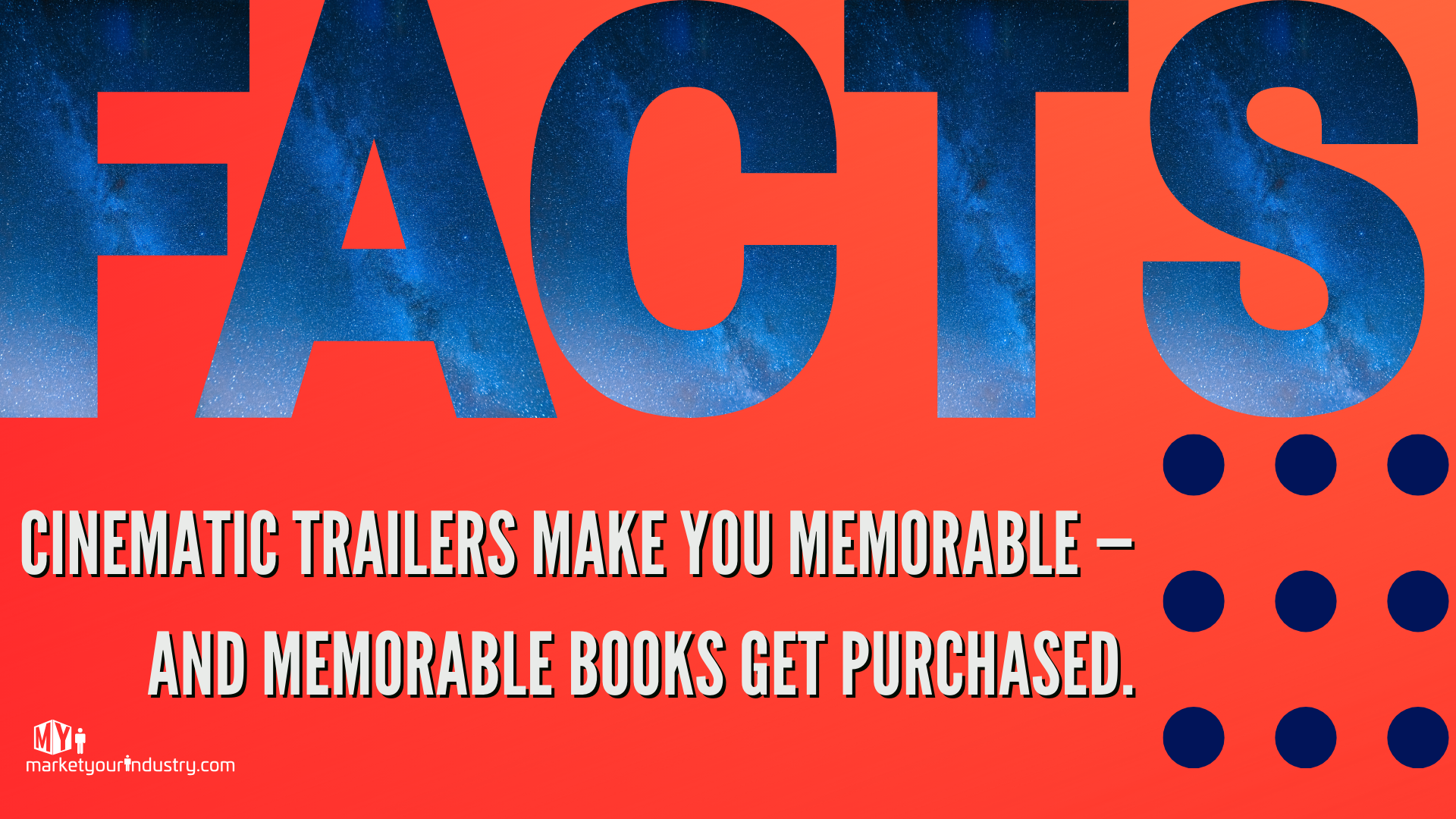
Standard videos keep you visible.
Cinematic trailers make you memorable —
and memorable books get purchased.
Final Thoughts: The Authors Who Win in 2025–2026 Will Be the Ones Using Cinematic Storytelling
We are entering the most competitive era publishing has ever seen.
Readers have more choices.
Authors have more tools.
Algorithms have more power.
The one thing that consistently cuts through the noise?
Emotion.
Story.
Cinematic impact.
A well-crafted book trailer is not optional anymore.
It’s the new standard of professionalism — the tool that:
Stops the scroll
Creates emotional connection
Increases conversions
Gets shared
Drives actual book sales
If you want readers to feel something, buy something, and remember something…
Give them a cinematic experience.