

How to Turn Your Book’s Theme Into a Marketing Strategy That SELLS
Most authors write a book because they’re passionate about the story — but when it comes time to market it, they freeze.
What do I say?
How do I get people to care?
Why isn’t anyone engaging with my posts?
If this sounds familiar, you’re not alone. Book marketing in 2026 is more competitive than ever, and authors need strategies that feel authentic, natural, and effective — not spammy or uncomfortable.
Here’s the good news:
Your book already contains everything you need to market it successfully.
You just have to know how to pull it out.
Today, I’m going to show you how to turn your book’s core theme into a marketing strategy that actually attracts readers and increases book sales. This approach works for both fiction and nonfiction, and it’s one of the most powerful methods I teach through Market Your Industry (MYI).
Why Your Book’s Theme Is the Secret Weapon of Your Marketing

Whether you're writing fantasy, romance, memoir, personal development, or business — your book has a central theme that connects emotionally with readers.
Themes like:
Overcoming fear
Found family
Redemption
Healing
Courage
Love after loss
Transformation
Justice
Betrayal
Growth
Leadership
Purpose
Survival
Readers don’t buy books because of the plot.
They buy because of the emotional journey your theme promises.
And marketing is simply learning how to communicate that journey.
This is why theme-based marketing works so well — it’s built on emotion, relevance, and resonance. In an overcrowded book market, this is what cuts through the noise.
Step 1: Identify Your Book’s Central Theme
This seems obvious, but many authors haven’t actually named their book’s core theme.
Ask yourself:
What lesson does the protagonist learn?
What emotional transformation happens?
What truth sits at the heart of your story?
If your reader could walk away with one feeling, what would it be?
Once you identify your theme, everything becomes easier — your content, your messaging, your video trailers, your elevator pitch, and your launch strategy.
Step 2: Turn Your Theme Into Marketable Messaging
Here’s where the magic happens.
Let’s say your book’s theme is “finding courage when everything feels impossible.”
Your marketing can now revolve around:
Inspirational quotes that reflect the theme
Short video clips or book trailer moments that capture resilience
Social media posts about courage and self-belief
Behind-the-scenes stories of why you wrote the book
Questions that spark engagement: “When was the last time you chose courage over fear?”
This creates emotional branding — which is the most powerful kind of branding an author can have.
Readers who share that theme will immediately feel connected to you.
Step 3: Turn Theme Into a Content Strategy
Here’s how to break your theme into content pillars:
1. Emotional Connection Posts
Share insights, moments, or quotes that support your theme.
2. Behind-the-Scenes Author Stories
Tell readers why this theme matters to you personally.
3. Educational or Value-Based Posts
Teach your readers something related to the theme (perfect for nonfiction authors).
4. Cinematic Book Trailer Clips
Short videos that visually reflect the theme perform extremely well.
5. Reader Engagement Prompts
Ask meaningful questions that connect your book to your audience’s real life.
This turns your theme into a full marketing ecosystem that works for months.
Step 4: Use Your Theme to Strengthen Your Book Trailer
If you’ve ever wondered why some book trailers go viral — this is why.
The most powerful cinematic book trailers aren’t just visually beautiful.
They express the emotional core of the book’s theme in under 60 seconds.
At MYI, every award-winning trailer we’ve produced (MarCom, Viddy, AVA Digital) has one thing in common:
It centers the theme above everything else.
When a trailer captures the emotional promise of the story, it triggers:
Curiosity
Anticipation
Emotional investment
Increased pre-orders
Higher launch momentum
This strategy works even for authors who create their own trailers using our MYI masterclass inside Canva.
Step 5: Turn Your Theme Into a Reader Journey
When a reader follows you, they should feel like they’re entering a world shaped by your book’s theme.
A strong reader journey looks like this:
They see a quote you post — they feel something
They watch a short video — they feel inspired
They read your behind-the-scenes post — they feel connected
They watch your book trailer — they feel hooked
They buy your book — because they want the full emotional experience
This is marketing that sells without feeling salesy.
Step 6: Marketing Becomes Easy When It Comes From the Heart
Your theme isn’t just a literary device — it’s the emotional engine of your entire book launch.
When you build your author brand around what your book really means, not only does your marketing become easier…
It becomes more effective.
If your theme is powerful, your marketing will be too.
Want to Take This Even Further?
If you're ready to bring your book’s theme to life visually, cstart with our DIY Cinematic Book Trailer Masterclass, built entirely inside Canva. Click here
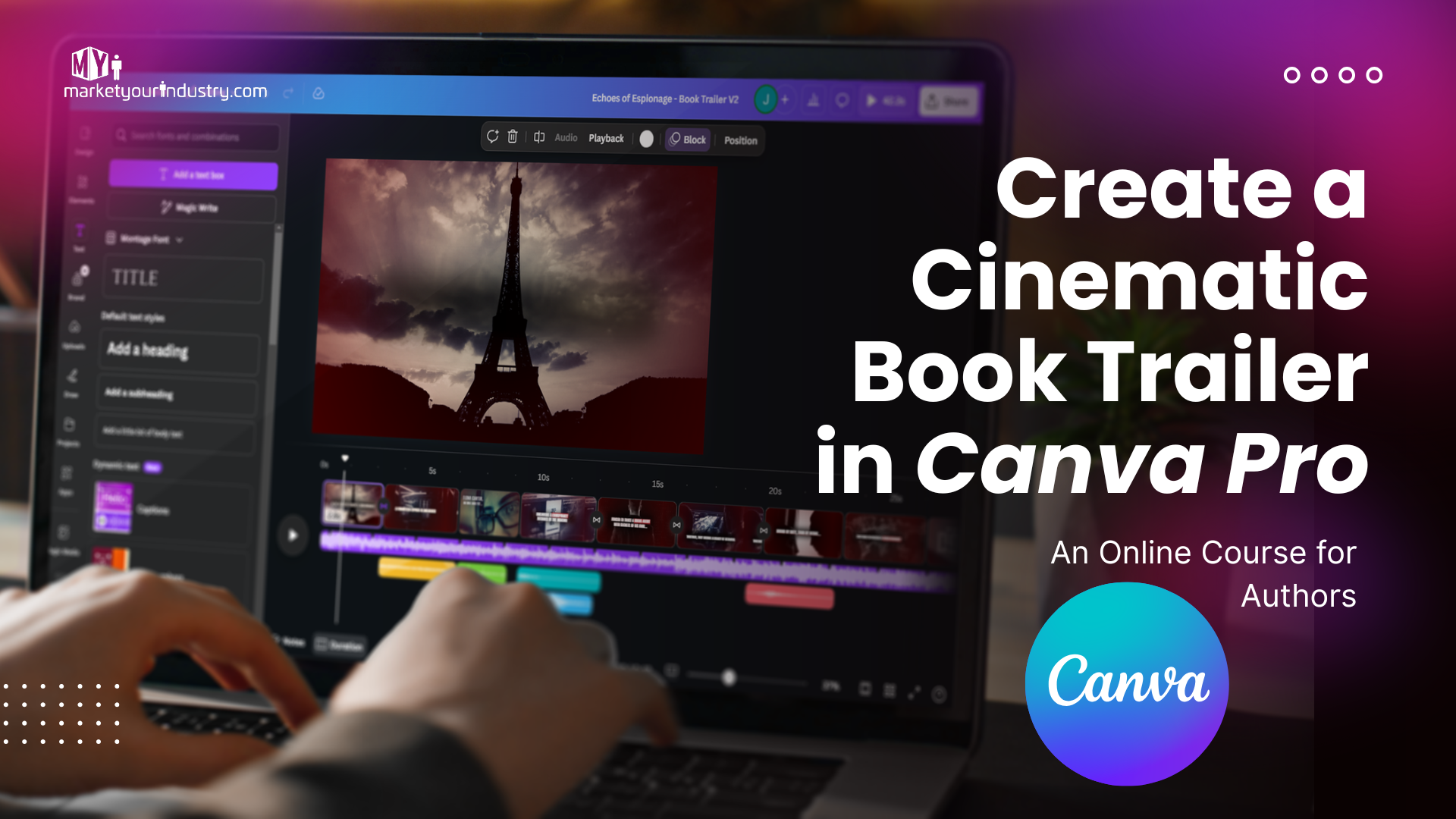
It’s beginner-friendly, affordable, and designed specifically for authors who want:
A professional-looking trailer
Without hiring a studio
Without technical skills
Without wasting time figuring it out themselves
Your story deserves to be seen — and your theme deserves a cinematic moment.
Click here for the Masterclass in Book Trailer Creation!