

What if the biggest threat to your future… was your past?
By Timothy Foster, Award-Winning Creative Director & Author Marketing Strategist
Most authors think the biggest threat to their future is the algorithm.
Or the market.
Or “too much competition.”
But in my experience, the thing that quietly does the most damage isn’t out there at all. It’s behind you.
It’s your past.
The launch that flopped.
The ad campaign that went nowhere.
The old cover you regret.
The voice in your head that still says, “I’m terrible at marketing.”
If you don’t deal with those things, they follow you into every new book, every social post, every attempt to “finally take this seriously.” And in a world where millions of books release every year, that’s a problem.
Source for global book publishing estimate: WordsRated – Global Book Publishing Statistics (which reports approximately 4 million new books published annually across all formats and regions).
So let’s talk about how your past might be quietly threatening your future as an author—and how to turn it into one of your biggest assets instead.
1. When Old Experiences Start Running the Show
If you’ve ever thought:
“I tried promoting my book once. It didn’t work.”
“Readers don’t care about my story.”
“I’m just not a ‘marketing person.’”
…that’s not just a thought. That’s an operating system.
Your brain stores past experiences as evidence. A rough launch, a bad ad, or a trailer that didn’t land can turn into a “rule” you carry forward:
“Book marketing is a waste of time.”
“I’m not good on camera.”
“Nobody wants to hear from me.”
But here’s the issue: the industry you tried to market in even three years ago is not the one you’re in today.
Self-publishing has more than doubled its output over the last decade, with Bowker reporting 2.6 million self-published books with ISBNs issued in 2023, an increase of more than 7% from the previous year.
Source: Bowker – Self-Publishing in the United States, 2023 Report.
At the same time, readers are consuming more digital content, more short-form video, and more story-driven media than ever.
Your old experience doesn’t reflect today’s reality—yet it might still be in charge of your decisions.
2. The Stories You Tell Yourself vs. the Stories You Sell
You know how powerful story is. You write them.
Neuroscience and communication studies both back up what storytellers have always known: stories activate more regions of the brain than facts alone and increase emotional engagement and retention.
Sources:
Journal of Cognitive Neuroscience – Research on narrative engagement and neural coupling.
Harvard Business Review – “Why Your Brain Loves Good Storytelling.”
But there are two storylines running in your author career:
The story you tell the world (your book, your brand, your marketing).
The story you tell yourself (about your worth, your past, and what’s possible).
If the internal story says, “I always mess up launches,” it will quietly undercut how you show up externally:
You post less.
You second-guess everything.
You talk about your book with less confidence.
You delay investing in things that could actually help.
Readers can feel that energy, even if they can’t name it.
The good news? You can rewrite both.
3. Your Past Is Not the Problem—Your Packaging Is
Let’s be honest: some authors are still trying to market 2026 books with 2014 tools.
Generic covers.
Long, text-heavy posts.
“Look at my book!” graphics that don’t stop anyone’s scroll.
Meanwhile, the way people consume content has radically shifted toward video and short-form visuals:
Research shows:
91% of businesses use video as a marketing tool.
A large majority of consumers prefer video over static content when learning about a product or brand.
Source: Wyzowl – State of Video Marketing 2024.
Additionally, engagement across platforms like Instagram Reels, YouTube Shorts, and TikTok continues to outperform static images.
Source: Social Media Today – Video Engagement Benchmark Analysis.
Readers are used to experiencing stories in motion before they commit time or money.
So when an author says, “Nothing I do works,” sometimes it’s not that their story is weak—it’s that the packaging hasn’t caught up with the current attention economy.
Your past results don’t define your story’s potential. They often just reflect the tools you were using at the time.
4. Turning Your Past Into Power (Instead of Luggage)
Instead of letting your past launches scare you, mine them.
Ask yourself:
Which parts of my previous efforts actually did get engagement, even if the sales didn’t follow?
Where did readers lean in—comments, DMs, shares, questions?
What did I avoid because I was uncomfortable (video, email, collaborations)?
Then reframe:
“That launch failed” → “That launch was research.”
“I’m bad at marketing” → “I’ve been under-equipped, not untalented.”
“No one cared” → “I didn’t give people enough chances to care.”
Your past is data, not a verdict.
And when you start telling that truth—to yourself and your audience—you tap into something readers are craving right now: honesty, transparency, and authenticity.
Numerous studies show that vulnerability, when used appropriately, increases trust, credibility, and emotional connection.
Source: Journal of Personality and Social Psychology – Research on the “Pratfall Effect” and vulnerability in communication.
You don’t have to trauma-dump to do this. Simple things like:
“Here’s what I did wrong with my first launch.”
“Here’s the mistake I made with my first cover.”
“Here’s how long this book really took to finish.”
Those are the stories that make people think, “Okay… this author gets it.”
And people who feel seen are more likely to buy.
5. The Moment You Decide to Reshoot the Trailer (Metaphorically and Literally)
If your past is threatening your future, the turning point is simple:
You decide to reshoot the trailer.
Sometimes that means literically creating a new book trailer that finally does your story justice. Sometimes it means rewriting your hook line, updating your author brand, or stepping into video for the first time in a way that feels authentic.
From my side of the industry, I see this shift happen all the time. An author comes to us saying things like:
“I don’t know how to talk about my book anymore.”
“I feel invisible.”
“I already launched and it just… fizzled.”
When we dig in, their story is usually strong. What’s missing is a clear, emotional visual entry point for readers — a way to experience the book in a few seconds and feel something.
That’s where cinematic book trailers change the game:
They combine your hook, your emotional core, and your brand into one moving piece.
They give you reusable content for ads, social media, email, and your website.
They create a feeling in your reader before they ever read the first page.
And feeling is what gets people to click “Buy now,” “Add to TBR,” or “Watch more.”
6. What This Looks Like for You (Very Practically)
If you’re reading this and thinking, “Okay, but where do I even start?” here’s a simple roadmap:
Name the old story that’s been holding you back.
Write a new version of that story.
Update one core marketing asset (your hook line, trailer, brand messaging).
Give your book multiple chances to be seen.
Use real tools and real strategy instead of guessing.
Small steps count.
7. If You Want Help Rewriting the Story of Your Book’s Future
At Market Your Industry, this is what we do every day.
We help authors move from:
“I hope someone notices my book…”
to
“Here is a powerful, cinematic way to show readers why this story matters.”
We offer:
✔ Done-for-you cinematic book trailers
Award-winning, story-driven, professionally produced visuals that elevate your book instantly.
✔ Training & digital tools
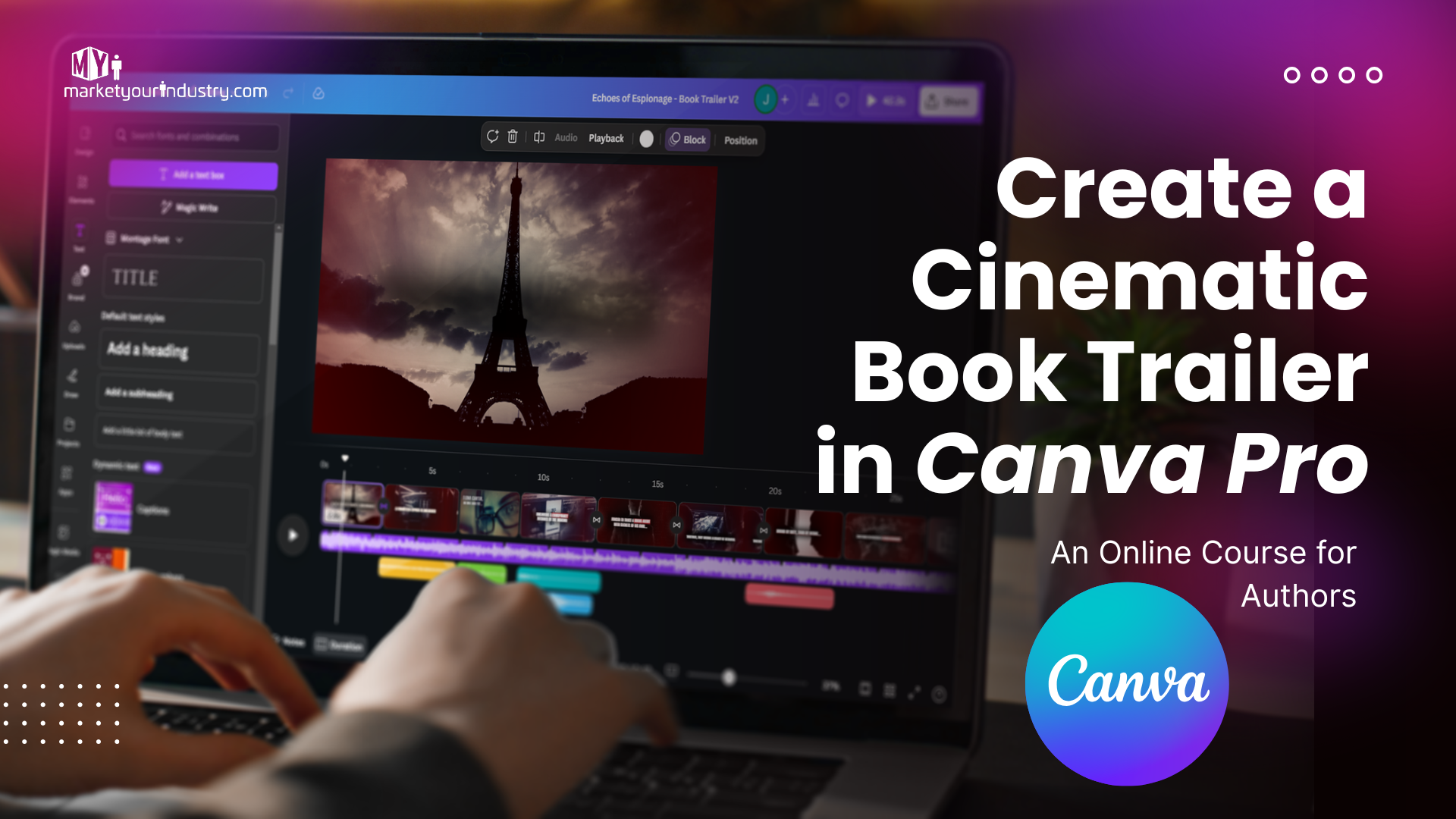
For authors who want to take control of their marketing in a simple, guided way.
And if you're not ready for a trailer yet, you can still take a powerful step:
FREE PDF: “60 Ways to Market Your Book With a Trailer.”
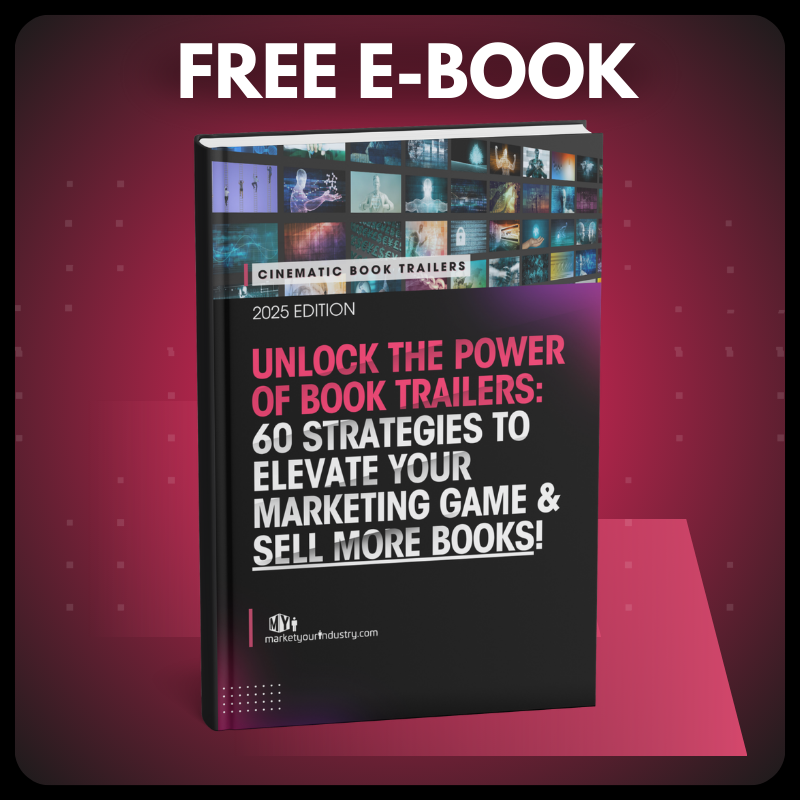
This guide gives you practical, creative ideas to squeeze the most visibility out of any trailer — whether it's professionally made or DIY.
You can download it instantly and start putting ideas to work today.
Final Thoughts: Your Future Deserves a Better Opponent
Your future as an author shouldn’t be held hostage by:
an old launch,
an old fear,
or an old version of you who didn’t have the tools you have access to now.
Your past isn’t the villain. It’s the backstory.
And just like any great character arc, there’s a moment when the lead decides:
“I’m not going to keep living by the old script.”
If this article becomes that moment for you—even just a small one—your future already has a better chance than your past ever did.
And that’s where everything begins to change.